“… Syme had vanished. A morning came, and he was missing from work: a few thoughtless people commented on his absence. On the next day nobody mentioned him. On the third day Winston went into the vestibule of the Records Department to look at the notice-board. One of the notices carried a printed list of the members of the Chess Committee, of whom Syme had been one. It looked almost exactly as it had looked before − nothing had been crossed out – but it was one name shorter. It was enough. Syme had ceased to exist: he had never existed…”
George Orwell, Nineteen Eighty-Four, Part II, Chapter 5.
If one day you realize that you live in the Orwellian Canada do not forget to remember: you are what you were prior to this stage in your life. If you fail to do so you will cease to exist, − you will become an unperson. Your strength is your determination to remember. You remember, therefore, you are, you exist. The very reason why “troublemakers” and “dissidents” end up in the Orwellian Canada is because Big Brother wants to abolish them, to make sure that they have never existed…

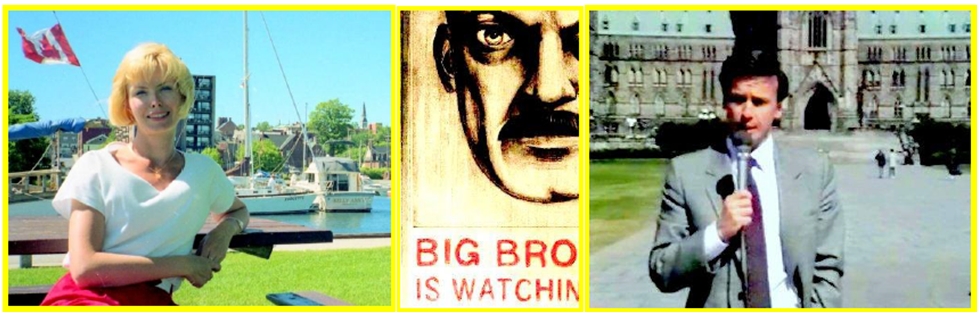
Svetlana Fotinov, General Manager of the Bureau of Soviet TV and Radio in Canada. Summer 1990.
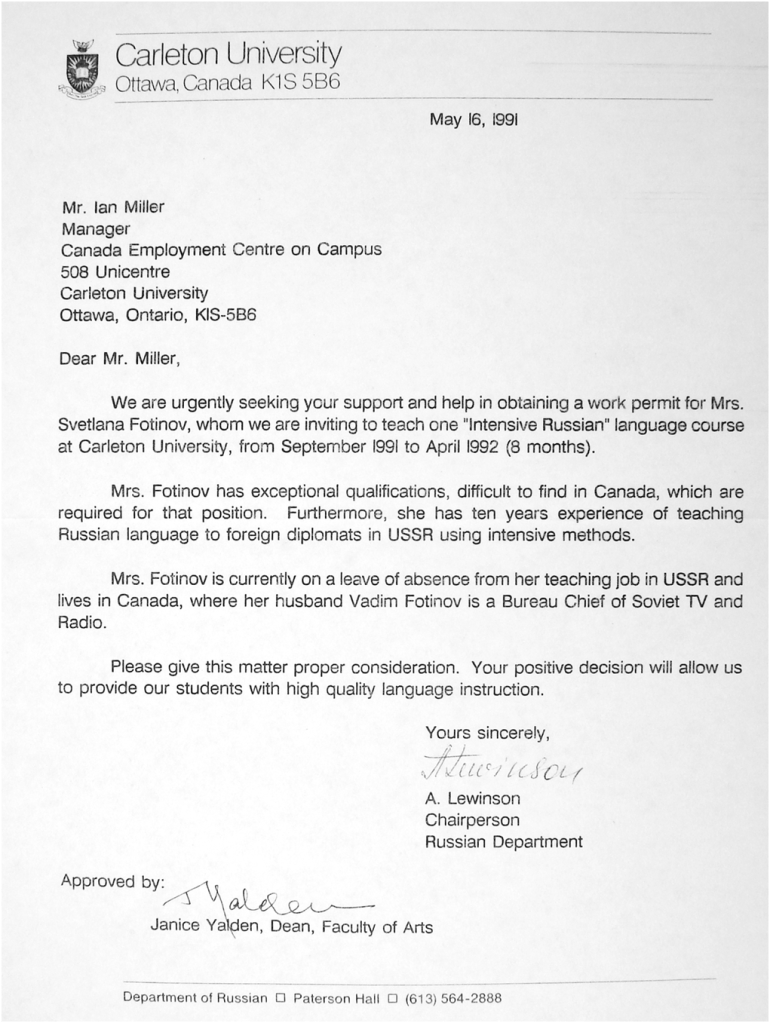
Svetlana had to stay in Canada in the wake of the August 19, 1991 coup in Moscow first as a political asylum seeker and then as a Convention refugee. She perished here in 2019 because she never forgot to remember that she came to Canada as a free and freedom-loving person who believed in human rights, human dignity and justice. Her beliefs clashed with the realities of her Canada, − the Orwellian Canada described on this web site at www.orwelliancanada.com
Born and raised in Ukraine, this is what she wrote about her life in the Orwellian Canada in the joint Statement of Claim against the federal government of Canada submitted by Svetlana Fotinov and Vadim Fotinov to the Federal Court of Canada in February 2013:
“… Living in Canada for more than 20 years, first, as a refugee and then as a hyphenated Canadian, a Russian Canadian, living for years in Quebec where people still refer to her as “la Russe” and “an immigrant”, despite her Canadian citizenship, Svetlana Fotinov − who believed that she would be able to teach foreign languages in Canada and apply her professional knowledge, skills and experience to the benefit of the people of Canada, helping people of different backgrounds and different cultures better understand each other, better understand cultures and traditions of various peoples, strongly believing that understanding leads to tolerance, and then to appreciation and respect − Svetlana Fotinov many times over the course of the past 20 years thought about her grandfather, Nikolai Alekhin. He was a well-educated and well-traveled Russian who lived in Ukraine in the 1930s, at the time of the Great Famine (holodomor) in that Soviet republic. He openly spoke about the dangers Stalin’s policies posed for Ukrainians and, specifically, for Ukrainian peasants and agriculture in the Ukraine that was called “the breadbasket of the Soviet Union”. He was arrested in 1937 for expressing his views and sent to a Gulag in Siberia where he died after being there for only 6 months.
Svetlana Fotinov, who has been living in Canada for over two decades, who has first-hand experience of the kind of treatment refugees and New Canadians get in this country, has thought many times about her grandfather and has often envied his fate: he perished in Siberia after labouring in the Gulag for 6 months only…”
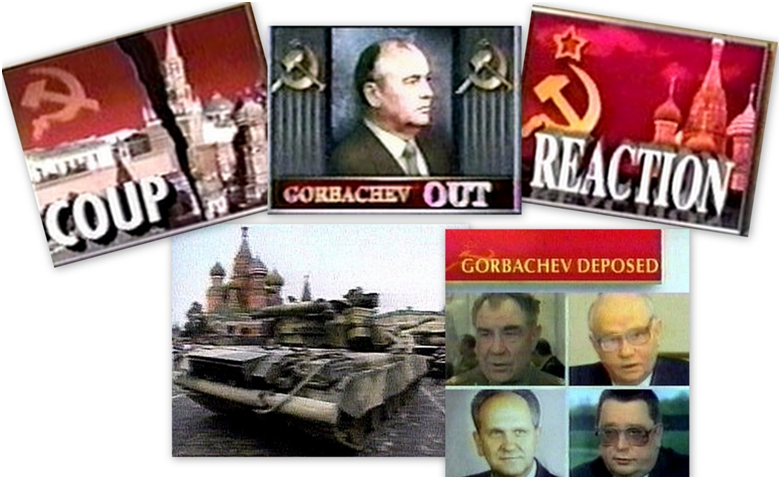
CBC report from Moscow, August 19, 1991
click on the image
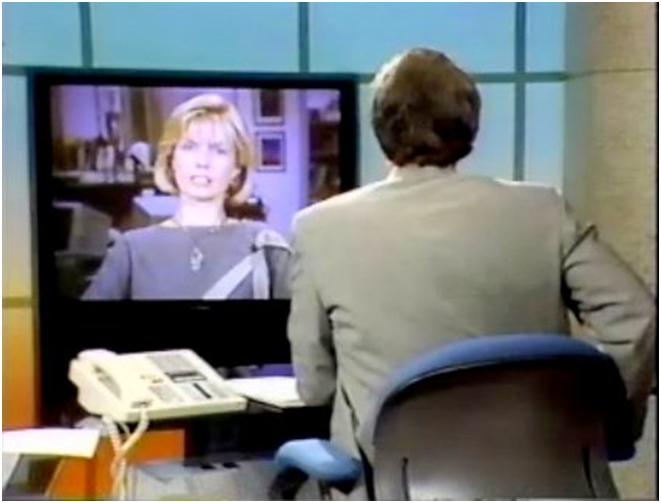
From a CTV interview, August 21, 1991
click on the image

click on the image
Vadim Fotinov has been fighting for justice for Svetlana and his family because he will always remember that the only reason why in the wake of the August 1991 coup in Moscow he entrusted the federal government of Canada with safety and security of his family was his belief that Canada respected human rights proclaimed in the Universal Declaration of Human Rights and the International Covenant on Human and Political Rights that Canada committed to observe. However, in his Canada − the Orwellian Canada − these rights are non-existent. Here is what he wrote in June 2019 in his Open Letter to Prime Minster Justin Trudeau Dear Prime Minister, Please Dismantle Our Orwellian Canada:
“… Dear Prime Minister, as a journalist I believe in the critical importance of freedom of expression and its inseparable component, freedom of information. These freedoms enable citizens to raise their concerns with the authorities without fear of reprisals, draw attention to human rights violations and make the government take action. They enable media to report what is being said by those who raise legitimate concerns with the state, thus protecting them from state persecution.
However, as is described below, these freedoms do not exist in our Orwellian Canada. 28 years ago I paid a very high price to be able to exercise these freedoms. I explained why they were so important to me in the article that was published in the Ottawa Citizen on the day of the attempted military coup in my country, the Soviet Union, when the tanks were rolling in the streets of my city – Moscow − and the world did not know what would happen next. I wrote in conclusion that I was realistic about my expectations of Canada, and explained why. However, the realities of my family’s life in Canada exceeded my most realistic expectations…”
A Futile Struggle With Big Brother by Vadim Fotinov, the Ottawa Citizen, August 20, 1991.
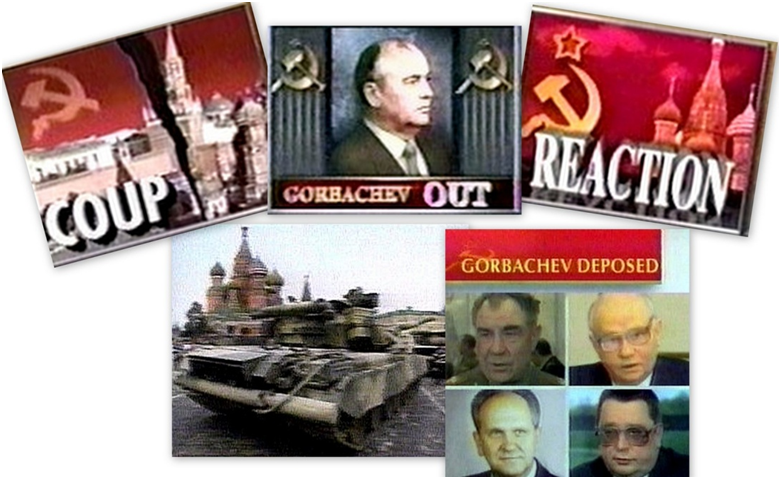
CBC interview, August 22, 1991
click on the image
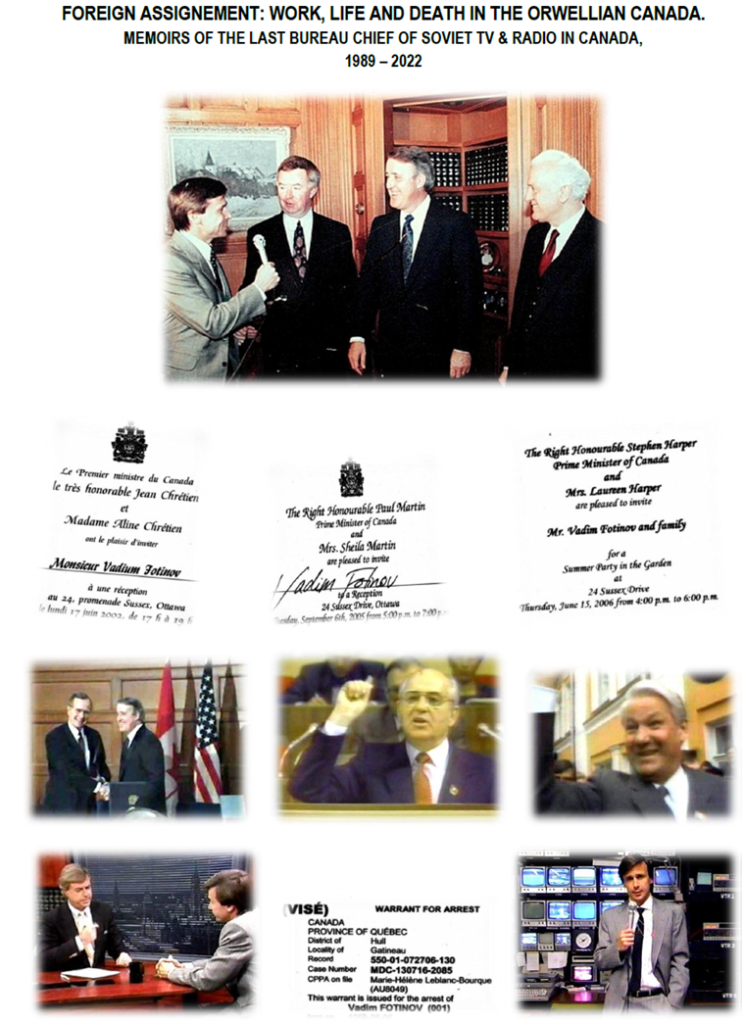
HOW I CANCELLED AN INTERVIEW WITH CANADA’S PRIME MINISTER
AND OTHER STORIES FROM MY REPORTER’S NOTEBOOK
click on the image
 OUR ORWELLIAN CANADA